

Fed officials sent hawkish signals and may keep interest rates unchanged in the short term
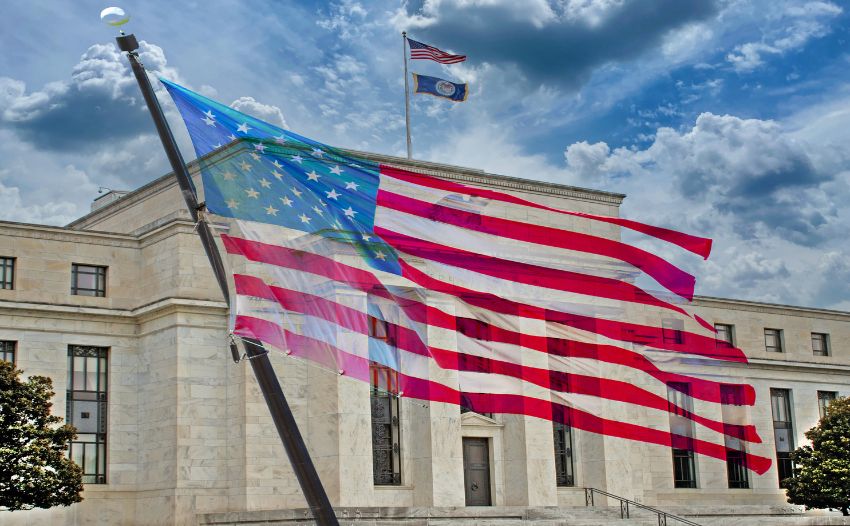
Several senior Federal Reserve officials said on Thursday that the Fed may keep interest rates unchanged for a longer period of time, given that inflation pressures in the current economic situation are still higher than the risks posed by the weak job market.
Fed Governor Adrienne Kugler said in a speech at the Economic Club of New York that she tends to keep the current policy rate unchanged because "the upside risks to inflation are greater than the downside risks to employment and output." She emphasized that the recent tariffs have put upward pressure on prices, and although the economy has shown some signs of cooling, it has not yet constituted a substantial slowdown.
Jeff Schmid, president of the Federal Reserve Bank of Kansas City, expressed similar concerns that tariffs will push prices up in the coming months, and this impact may take some time to fully manifest.
The market generally expects that the May employment report released by the U.S. Department of Labor on Friday will show that the unemployment rate remained at 4.2% for the third consecutive month, and the number of new jobs was about 130,000, which is lower than the 177,000 in April, but still above the 100,000 benchmark indicating a healthy labor market. Meanwhile, the Consumer Price Index (CPI) is expected to accelerate again in May as the recently implemented large-scale import tariffs begin to be reflected in the prices of goods and services.
With the June 17-18 FOMC meeting approaching, Fed officials have entered a "quiet period" before policy, and this week is the last window for officials to speak. Judging from their remarks, most policymakers tend to keep interest rates unchanged in the 4.25%-4.50% range. However, officials' views are not completely consistent. For example, Federal Reserve Board member Christopher Waller previously said that if the labor market needs support, he is willing to "ignore" the one-time inflation increase caused by tariffs and consider starting to cut interest rates in the second half of this year.
Federal Reserve Chairman Powell took a more neutral stance, believing that the current strong job growth and easing inflation provide room for the Fed to "wait and assess the situation." Philadelphia Fed President Patrick Harker also emphasized that the Fed should "remain patient" and wait for clearer data before making decisions.
Although the Fed seeks a balance between price stability and full employment, more officials are currently inclined to prioritize inflation risks. Schmid made it clear that under the uncertain impact of tariffs, the Fed must "remain flexible" to cope with the dual pressures that prices and employment may face.
6 Reasons To Open An Account
Multi-language 24/7 professional support
Fast, convenient fund and withdrawals
Free demo account $10,000
International recognition
Real-time quotes with push notification
Professional market analysis broadcast
6 Reasons To Open An Account
Multi-language 24/7 professional support
Fast, convenient fund and withdrawals
Free demo account $10,000
International recognition
Real-time quotes with push notification
Professional market analysis broadcast